



Auctions & logistics
A condition report a buyer will bid on, produced by whoever is standing next to the car.
One walkaround in, a full report out — identity, panels, damage, severity, tires, engine bay and a valuation — assembled by the models rather than by whoever had the clipboard.
Auction houses, remarketers, transporters and the yards in between
Today
A car changes hands four times between the yard and the buyer, and the only condition record is a paper sheet somebody filled in at dusk.
What changes
- The same report whether the yard is in Lyon or Lisbon, produced by staff you did not have to train as inspectors.
- Remote bidding on a 360 with damage pinned to the panel, instead of nine photos and a phone call.
- Timestamped condition at every handover point, keyed to the VIN.
Solutions for Auctions & logistics
Start with the workflow that solves today’s bottleneck.
These production workflows fit this business type. Each one can be adopted independently through the same platform.

Image production
Automotive remarketing
Standardise exterior imagery, recover weak source photos and replace license plates without sending a vehicle through a studio.
Explore solution →
Condition intelligence
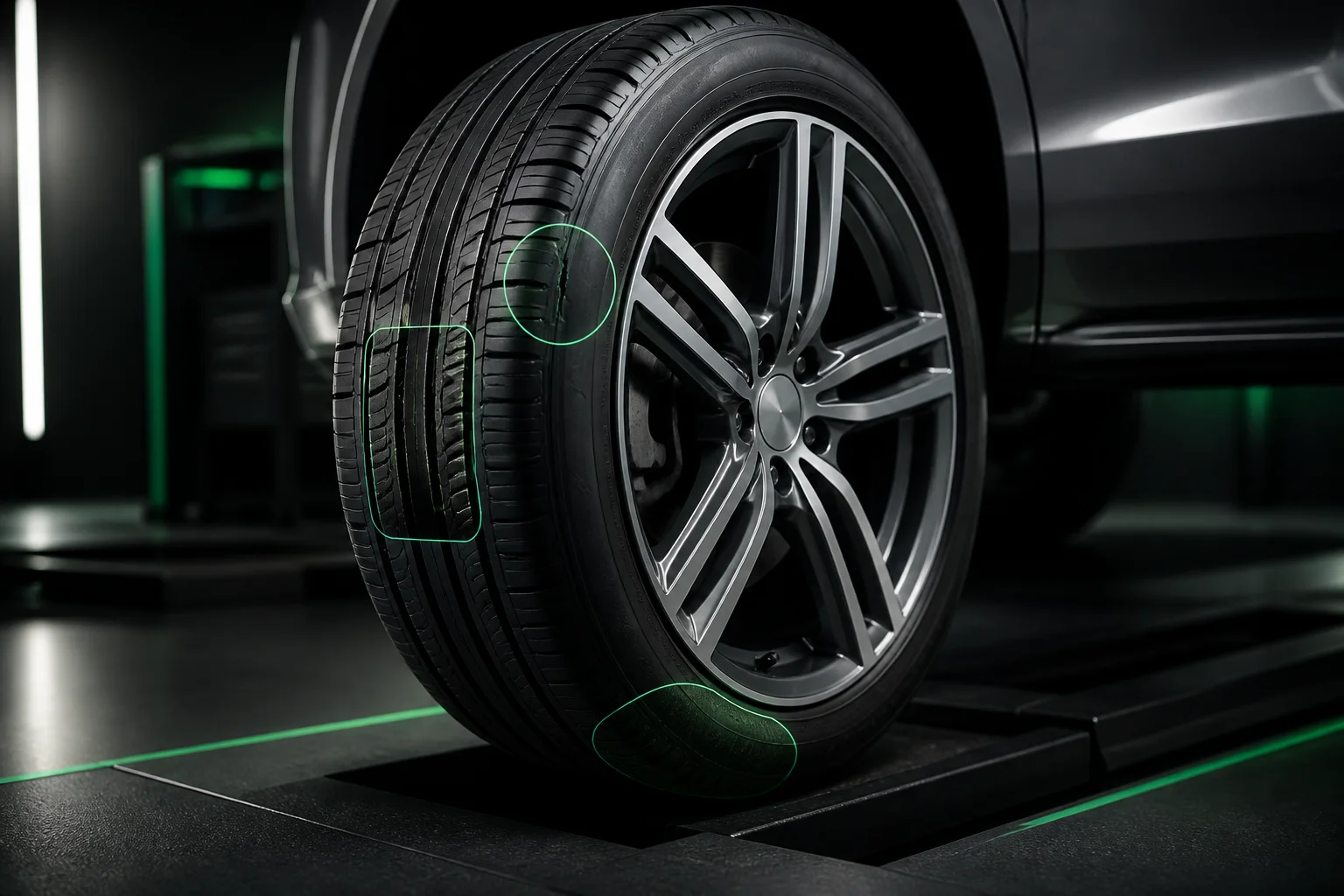
AI tire inspection
Identify the tire, locate each wheel and grade visible tread, sidewall damage and wear consistently across a fleet or inspection flow.
Explore solution →
Damage intelligence
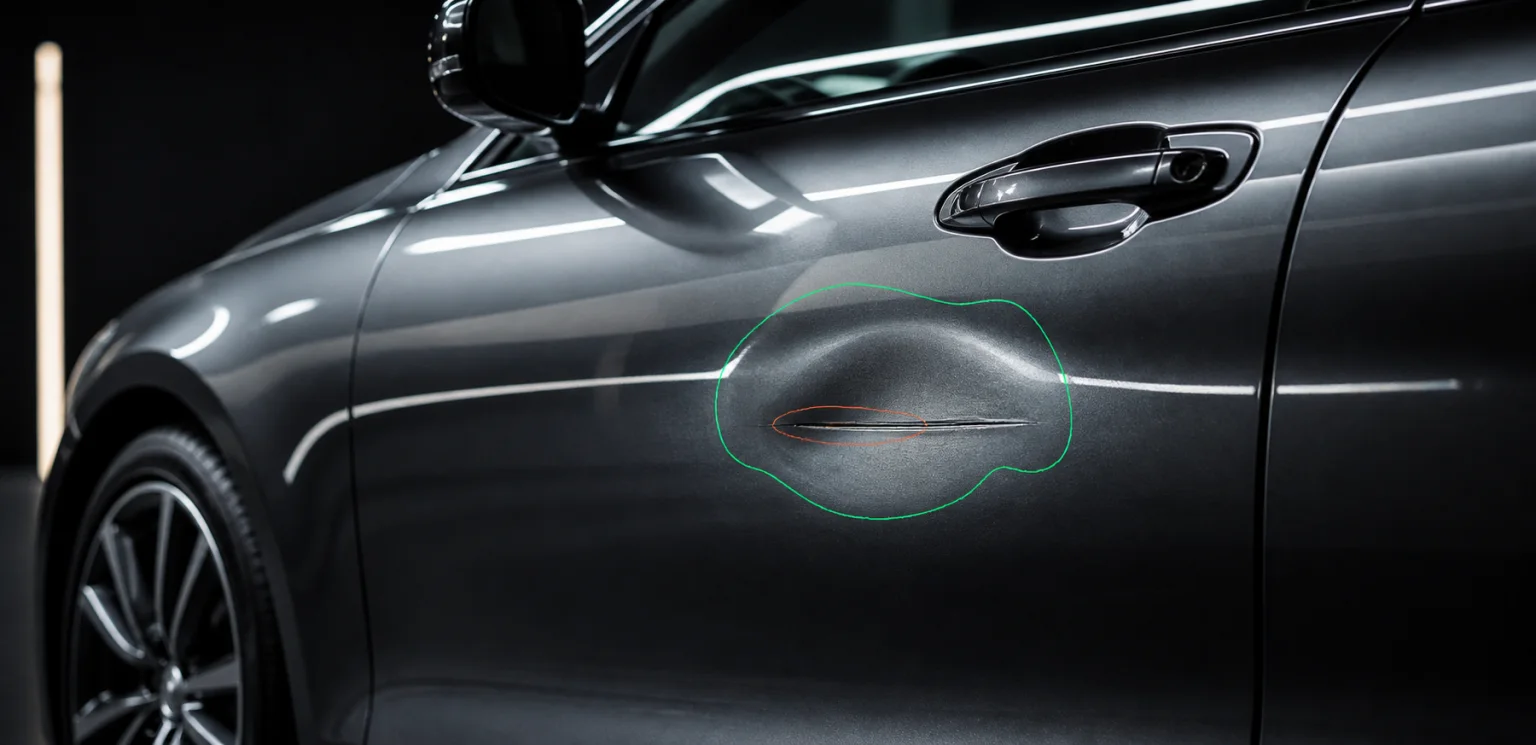
Exterior damage inspection
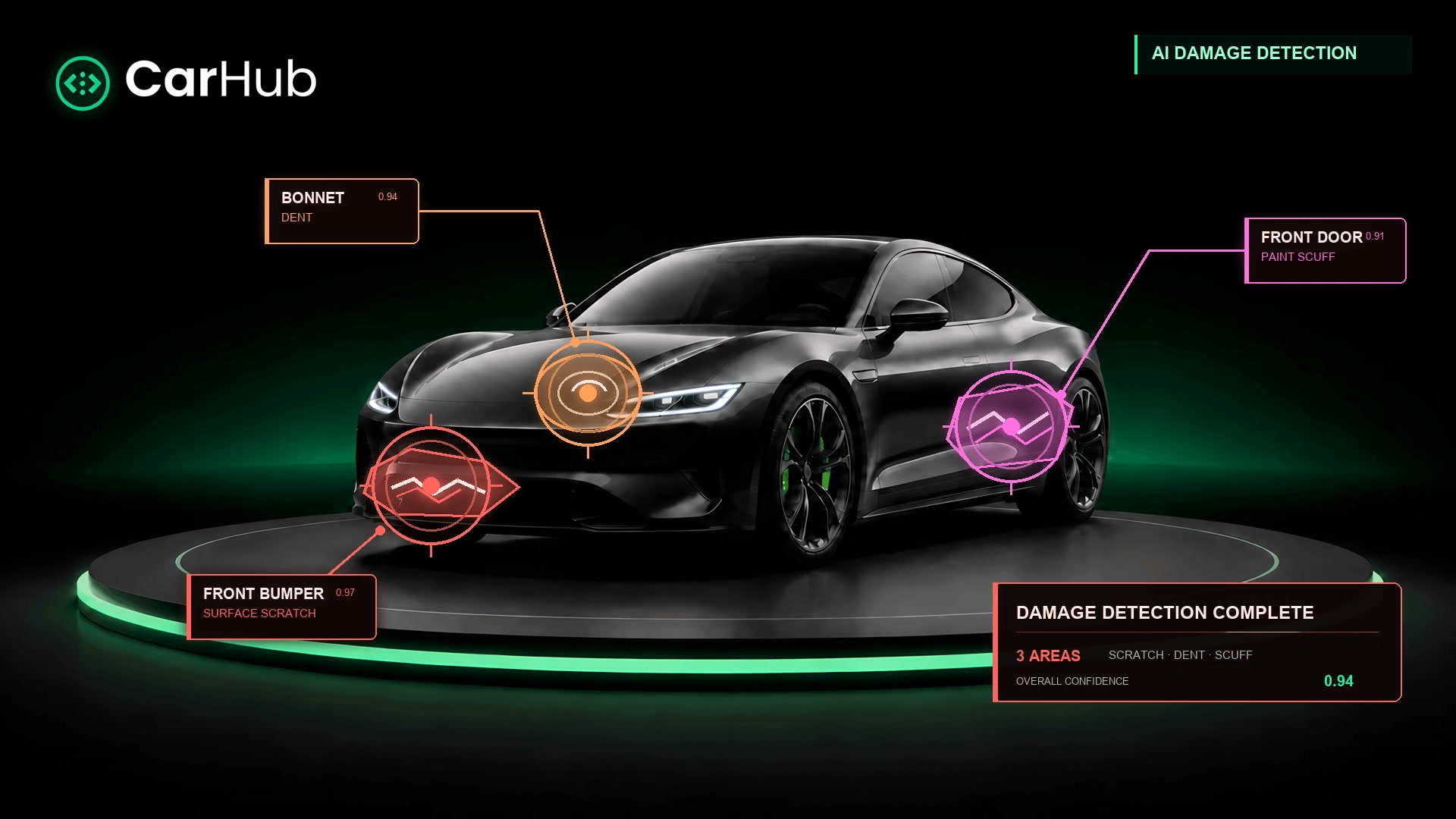
Turn a guided photo set or walkaround into damage masks tied to named body parts, ready for triage, handover or review.
Explore solution →

Vehicle identity
License plate scanning
Scan a vehicle plate from a phone photo and return normalised text, issuing country and region—whether it is angled, distant or captured in poor light.
Explore solution →
Where it starts
One endpoint, before you commit to anything.
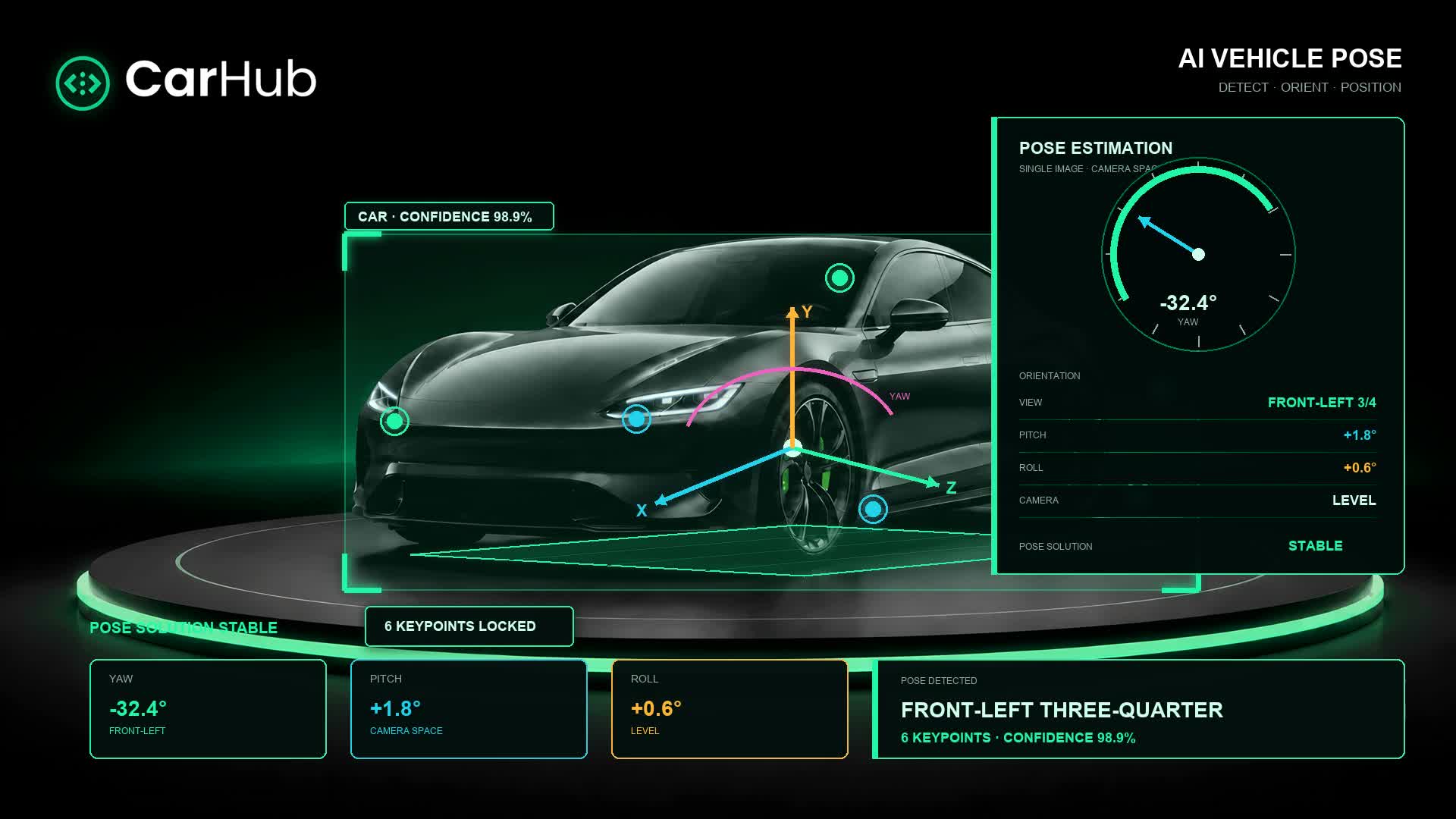
Vehicle pose validates the frames collected by the capture flow before the remaining model jobs are composed into the report.
the first call
per image
POST/v1/vehicle/pose
model: vehicle-pose
async by default · webhook or poll · independently rate-limited
The chain
The flow that first call sits in.
Each row is a real endpoint, priced and rate-limited on its own. Compose the set in the order your workflow requires.
- 01POST/v1/vehicle/pose
vehicle-pose · per image
Identity, attributes and an overall condition profile in one read
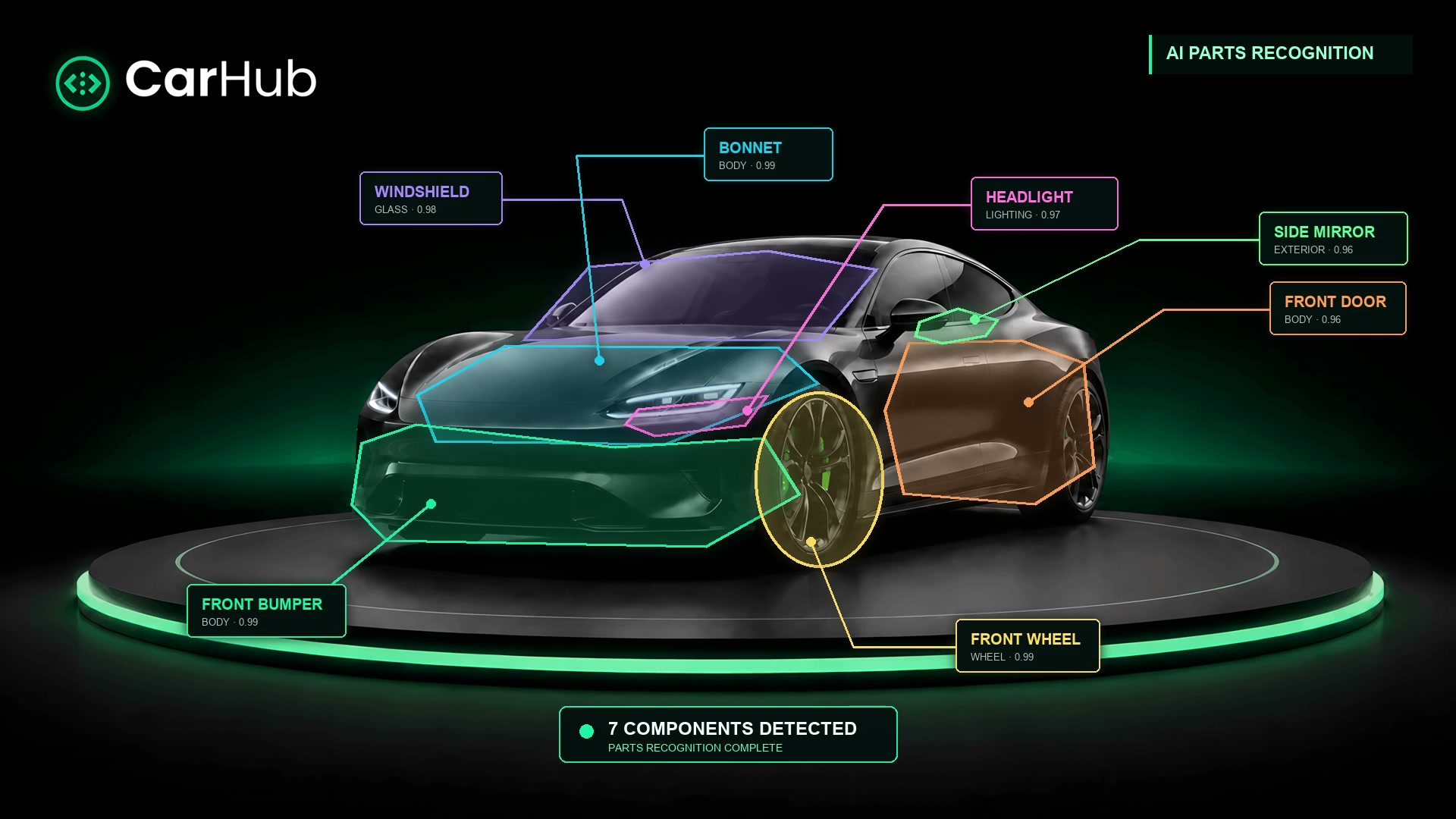
- 02POST/v1/parts/decompose
parts-decomposition · per vehicle
The component map every line of the report hangs on
- 03POST/v1/damage/detect
damage-detection · per vehicle
What is wrong, located and typed per panel
- 04POST/v1/damage/severity
severity-estimation · per detection
How wrong — cosmetic through structural, per detection
- 05POST/v1/tire/detect
tire-detection · per image
Wear and sidewall damage graded per wheel, the line buyers always ask about
- 06POST/v1/engine/detect
engine-detection · per vehicle
Engine-bay read: components present, leaks, missing elements
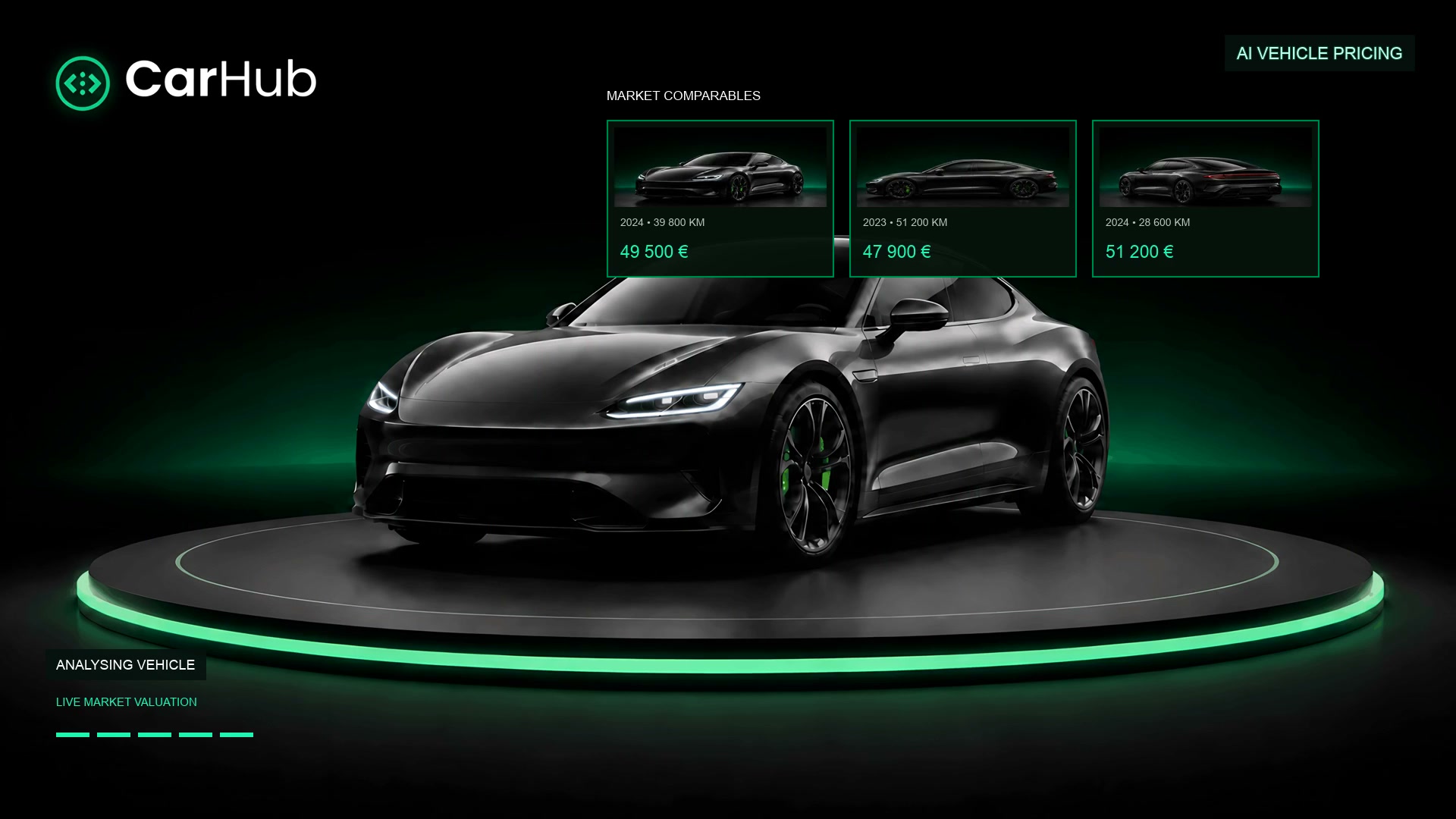
- 07POST/v1/pricing/vehicle
car-pricing · per vehicle
A valuation built from identity plus what was actually observed, not from a trim guess
Across the stack
What this path draws on, layer by layer.
Layer 1 · Components
all →- Player SDK
- Embeddable 360° player — drops into your own site against a vehicle URL
- Report SDK
- Composed condition report, customer-branded, web or export
Layer 3 · Data
all →- Identity
- VIN decode, build sheet, factory options, plate → VIN lookup
- History
- Mileage records, ownership, accidents, write-off status
- Compliance
- Recalls, service campaigns, emissions, homologation, taxes
- Value
- Market pricing, residuals, depreciation curves
- Risk
- Stolen-vehicle, fraud and risk checks
Where it goes
Then the same key runs the lot
The report is the wedge. Around it sit the model and supported data calls a lot page or arbitration desk can add through the same API contract.
Lot disclosures
Supported recalls, mileage records and write-off fields returned through one schema
Catalogue imagery
image-backgrounding renders the lot photos from the capture you already took
Damage in transit
A second inspection at delivery localises who caused what, on the same part map
Arbitration
Every claim traceable to a masked detection on a named part, with the frame it came from
What we do not claim
The report is only as complete as the submitted photo set — a panel that is not captured cannot be assessed.
Other paths
Same key, different first call.
Marketplaces & DMS
Classifieds, marketplaces, dealer groups and the DMS vendors behind them
Listing photos come from whoever was holding the phone. Six sellers, six driveways, six exposures — one inconsistent results page.
See the path →Dealerships & dealer groups
Franchised and independent dealers, dealer groups and used-vehicle operations
Fresh inventory waits for photography, appraisal and data entry before it can appear online — and every rooftop presents it differently.
See the path →Insurance & claims platforms
Insurers, MGAs, claims platforms and the assessors working inside them
A policyholder sends eight photos. An assessor opens them one at a time to decide whether this is a bumper scuff or a total loss.
See the path →Rental & vehicle sharing
Rental desks, car-sharing operators and anyone handing over keys at volume
The customer says the scratch was already there. The agent says it wasn’t. Nobody photographed that panel at check-out.
See the path →Start with /v1/vehicle/pose
One call, on your own data, before anything in your product changes.