01Your app
 Vehicle photos
 CarHub SDK Capture & upload
Turn vehicle images and data into inspections, enriched records, and listing-ready media. Models, data, and SDKs—inside your product.
Vehicle photosOne key. One integration.
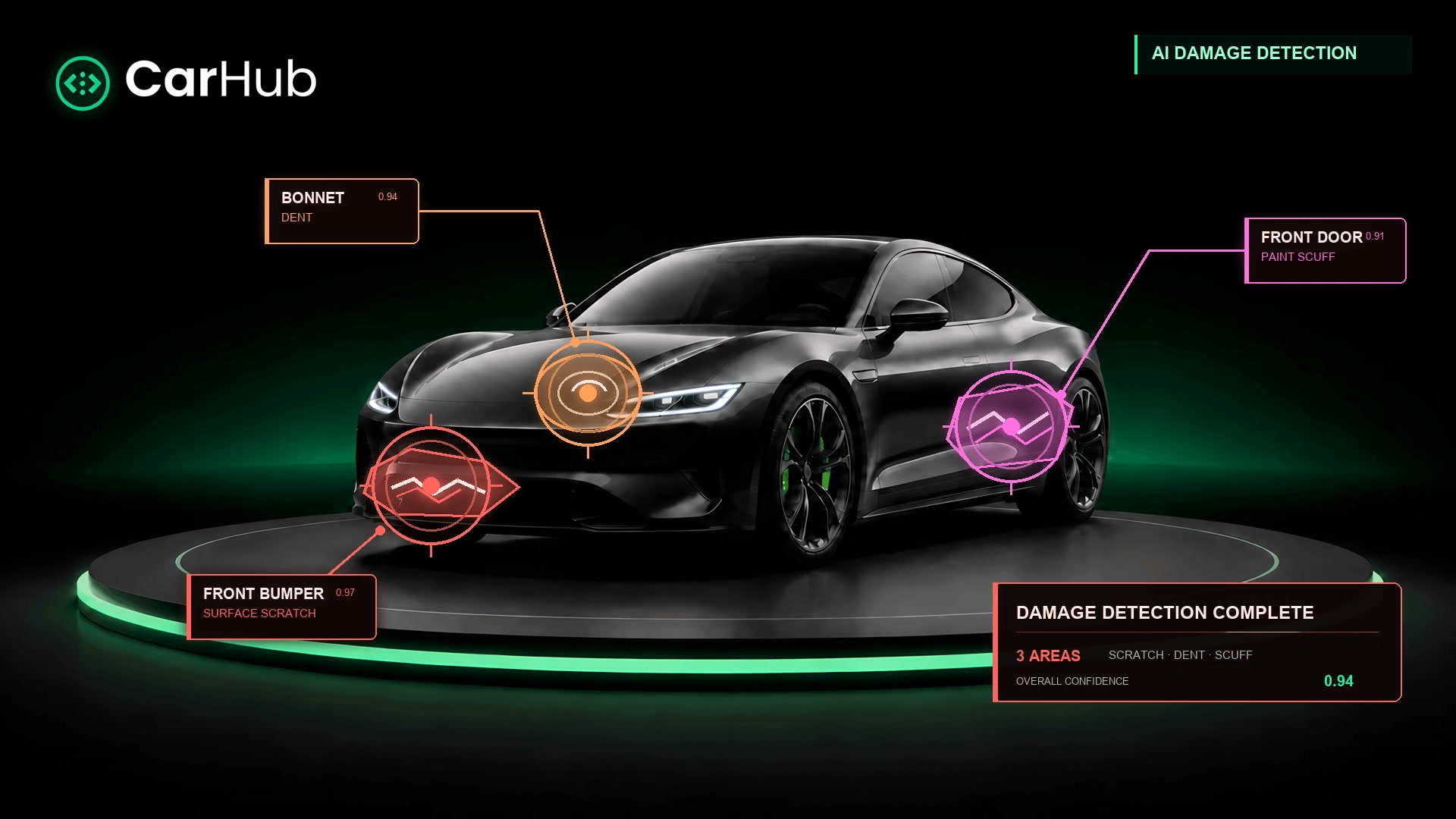
Visible damage, located and classified.
Your interface. Our intelligence. Your customer.
Model Context Protocol
Use our MCP to bring active CarHub models into your agent as tools, with the same API key, limits and pricing.
Two ways to build
Choose the route that fits your team. Both use the same automotive AI, SDKs and vehicle data underneath.
App builder
Describe what your team needs
LIVE PREVIEW
Showroom Capture
Showroom
12 VEHICLES
 READY TO PUBLISHStudio 01
2026 vehicle
8 photos · showroom applied
CarHub Apps
Start with the workflow in your own words. CarHub assembles the capture experience, automotive intelligence and managed deployment into an app your team can keep editing.
Explore AppsBuild directly
Integrate the same platform into software your team already owns.
Explore the platformChoose an outcome
Each solution combines the necessary models, capture steps and review points into one implementation path. Every underlying endpoint remains available separately.
Image productionImage production
Standardise exterior imagery, recover weak source photos and replace license plates without sending a vehicle through a studio.
/v1/render/backgroundExplore →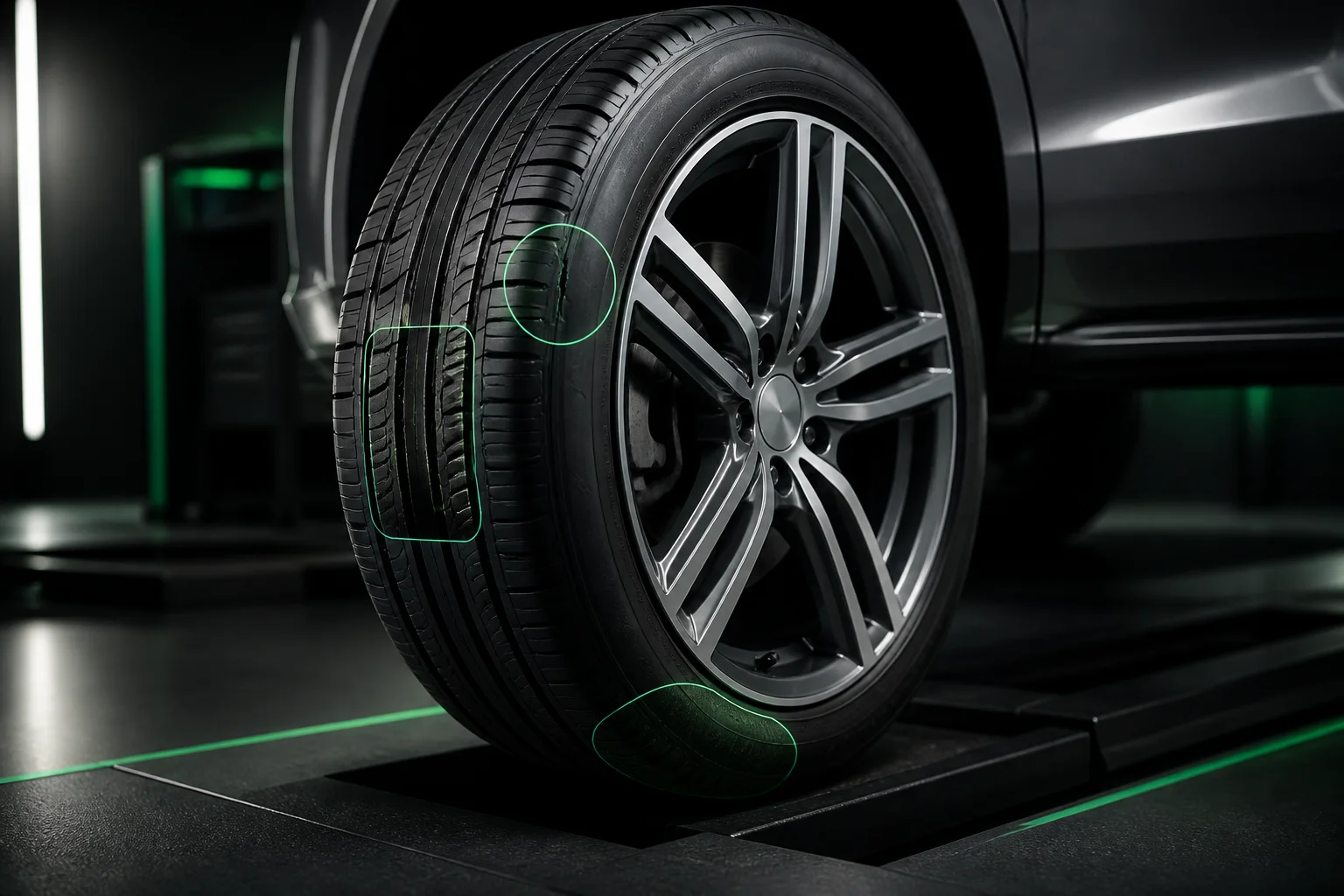 Condition intelligence
Condition intelligence
Identify the tire, locate each wheel and grade visible tread, sidewall damage and wear consistently across a fleet or inspection flow.
/v1/tire/detectExplore →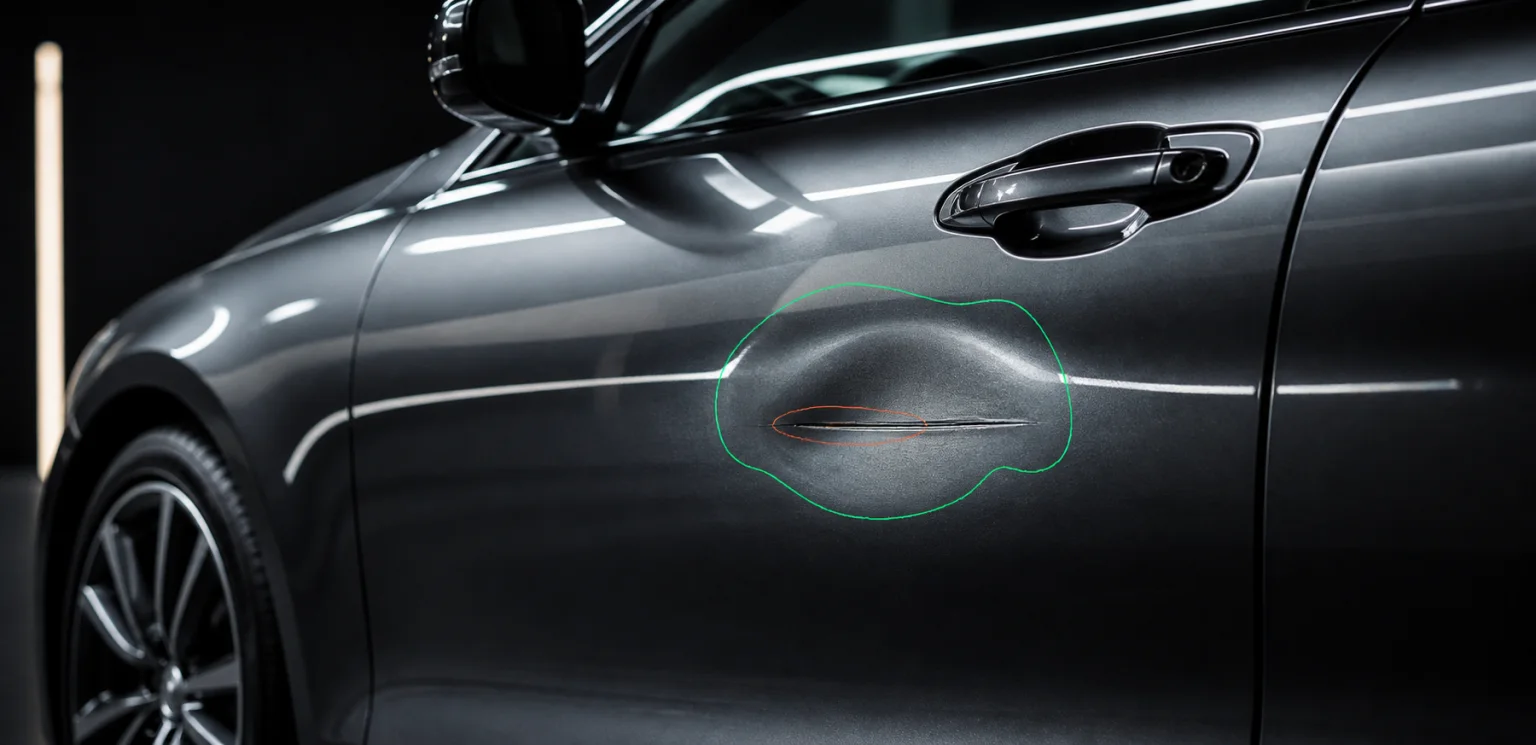 Damage intelligence
Damage intelligence
Turn a guided photo set or walkaround into damage masks tied to named body parts, ready for triage, handover or review.
/v1/damage/detectExplore → Vehicle identity
Vehicle identity
Scan a vehicle plate from a phone photo and return normalised text, issuing country and region—whether it is angled, distant or captured in poor light.
/v1/plate/readExplore →The stack
Take the whole stack or one endpoint from it. Nothing here requires adopting the rest.

Layer 1
What your customer looks at
player · capture · review · report

Layer 2
What reads the vehicle
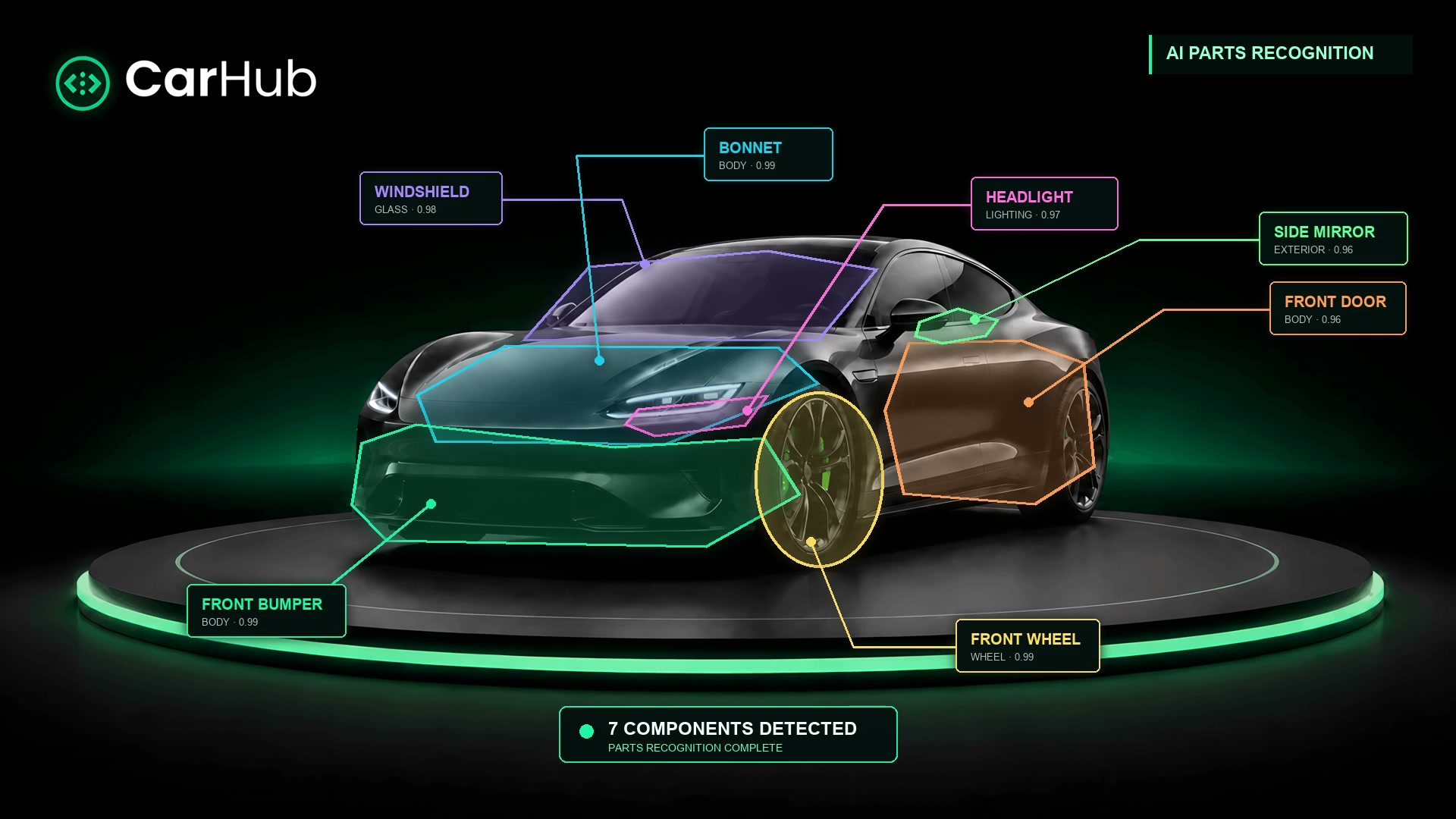
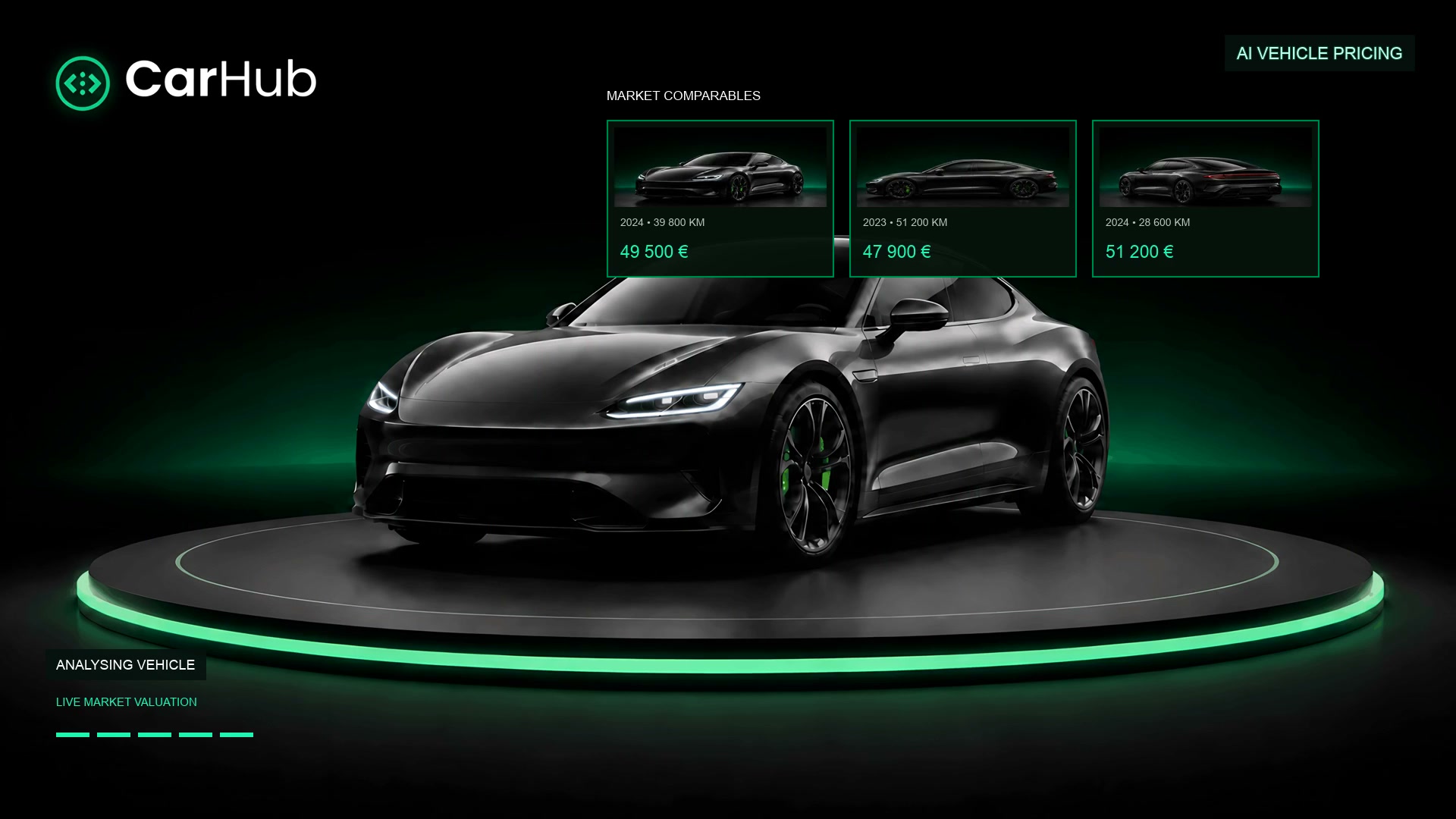
segment · damage · severity · pricing · render

Layer 3
What we do not compute ourselves
VIN · specs · battery · history · finance
Layer 1 · Components
Four SDKs — player, capture, review, report — shipped for Web, iOS and Android, so nobody on your team writes a WebGL viewer or a guided-capture camera flow.

Embeddable 360° player — drops into your own site against a vehicle URL

Camera flow that guides a non-expert through a complete shot set, start to finish

Human-in-the-loop validation and correction of model output

Composed condition report, customer-branded, web or export
Web · iOS · Android
Layer 2 · Models
Each endpoint is priced and rate-limited on its own. Call one in isolation, or chain the set — nothing assumes you adopted the others.
Hover a model to see it run · the tracks park while you read
Layer 3 · Data
Sourced from supported vehicle-data providers, then normalised into one schema behind the same key. You integrate one contract instead of provider-specific formats.
Domain 01
Domain 02
Domain 03
Domain 04
Domain 05
Domain 06
Domain 07
Domain 08
Domain 09


Get started
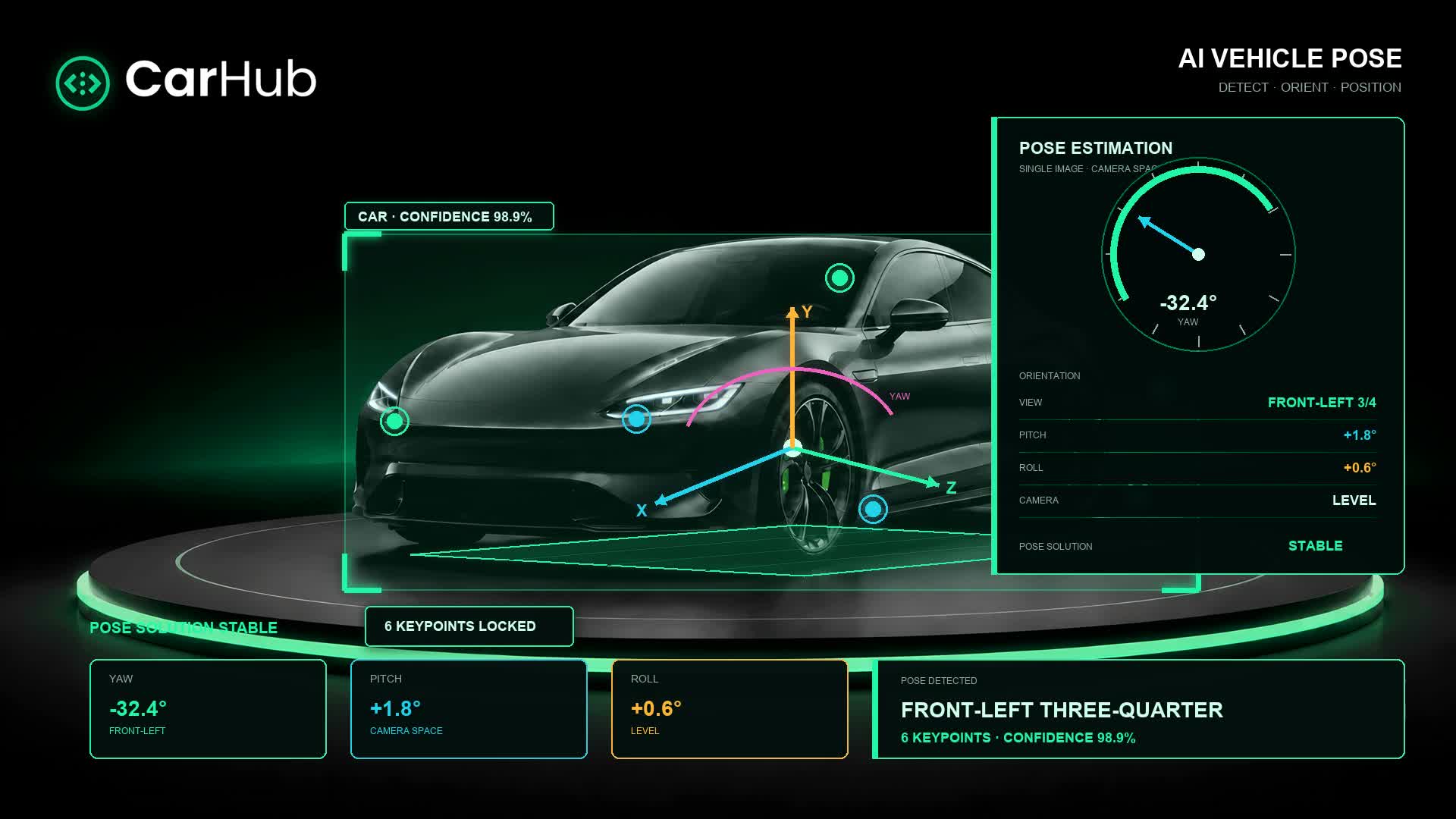
Send a photo to /v1/vehicle/pose and read the response. Everything else on this page runs on the same key.
Key issued on email verification · every endpoint priced on its own · one invoice